DEMORE / Building Materials / Technical Dossier
Product Dossier · No. BM-02

Vacuum Insulation Panel (VIP)

The thermos flask, flattened into a building panel. A vacuum-sealed core delivers up to ten times the performance of conventional insulation in a tenth of the thickness — manufactured in Korea by a specialist Korean insulation maker, and sourced for global buyers through DEMORE.

0.002W/m·K
Thermal conductivity (from)
10×
vs conventional insulation
10–20mm
Typical panel thickness
<1mbar
Internal vacuum
01 · Overview

Why the world's best insulator is a panel with nothing inside.

Heat escapes a building three ways — conduction, convection, and radiation — and the first two both need a medium to travel through. A vacuum insulation panel removes the medium. A porous core is sealed inside a gas-tight envelope and evacuated to below 1 millibar, cutting conduction and convection off at the source. What remains is the lowest thermal conductivity of any insulation material in commercial use today.

The panels in this dossier are manufactured in Korea by a specialist Korean insulation maker with two decades of production experience in high-performance thermal materials, whose insulation products are installed across apartment towers, infrastructure, and plant projects for Korea's leading tier-1 construction groups. DEMORE is the export sourcing partner — one English-speaking contact connecting your project to the plant.

Heat loss through external walls and roofs accounts for the large majority — commonly cited at around 70% — of an existing building's total heat loss. That is exactly where a panel this thin and this effective changes the arithmetic of a project.
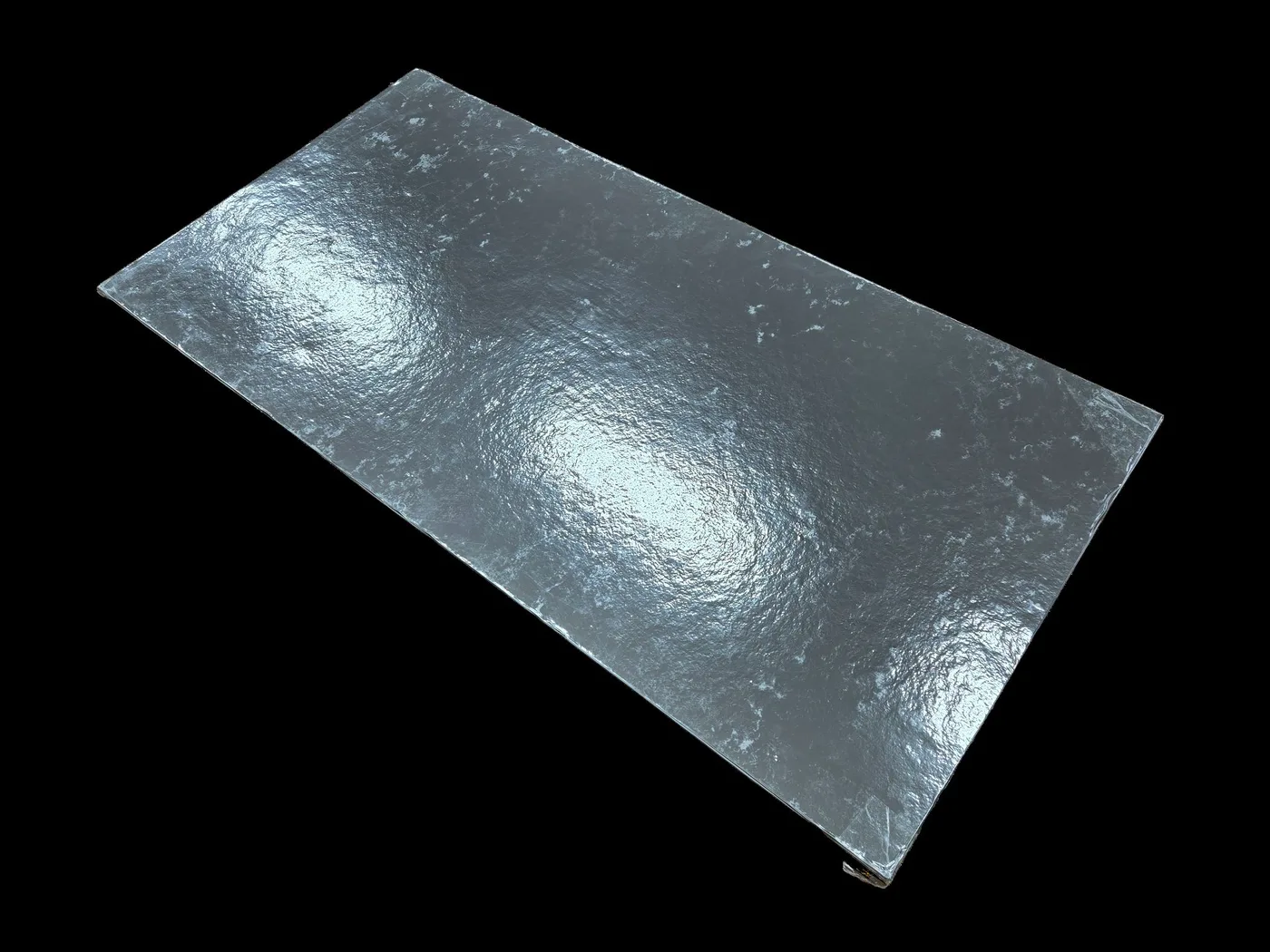
Vacuum insulation panel with metallized barrier envelope
VIP panel — metallized hybrid barrier envelope
02 · Anatomy

Three components. One job: hold the vacuum for decades.

A VIP is only as good as its ability to stay evacuated. Each component of the panel exists to create the vacuum, protect it, or police it.

C·01 — Core

Fumed silica

An ultra-fine, porous, inorganic silica structure that holds the panel's shape against atmospheric pressure once evacuated. Its nano-scale pore structure suppresses residual gas conduction, and as a mineral material it does not burn. Glass-fiber cores are also used in the wider VIP market; fumed silica is the premium choice for long service life.

C·02 — Envelope

Hybrid barrier film

A multi-layer laminate of polymer films and aluminum metallization that blocks air and water vapor from re-entering the panel. The hybrid construction balances two competing demands: maximum gas-tightness for longevity, minimum metal content to avoid thermal bridging around panel edges.

C·03 — Getter

Internal gas absorber

Even the best envelope admits trace molecules over the years. A getter — typically quicklime (CaO) or zeolite-based — sits inside the panel and chemically captures incoming gas and, above all, water vapor, actively maintaining the vacuum throughout the panel's service life.

Vacuum insulation panel surface detail
Panel surface — vacuum-compressed core under barrier film

The physics in one sentence: still air conducts heat at about 0.026 W/m·K, which is why foam insulation — mostly trapped air — bottoms out around 0.02–0.04 W/m·K. Remove the air, and conduction through gas simply stops. A VIP operates at 0.002–0.004 W/m·K, an order of magnitude beyond what any air-filled material can physically reach.

This is the same principle that keeps coffee hot in a thermos flask for hours — engineered into a flat, dimensionally precise construction panel.

03 · Performance

The thickness chart that sells itself.

To meet the same code-level wall insulation value (Korean central-region, direct external exposure, U = 0.15 W/m²K), here is how much of each material a wall must carry. This single chart is why VIP wins balcony conversions, remodels, and zero-energy targets.

Vacuum insulation panel · 0.002 W/m·K15 mm
15
Aerogel · 0.015 W/m·K95 mm
95
Rigid urethane (Grade 1) · 0.024 W/m·K150 mm
150
Extruded polystyrene XPS · 0.027 W/m·K170 mm
170
Bead-method EPS · 0.036 W/m·K230 mm
230
Glass wool 24K · 0.036 W/m·K230 mm
230
CriterionVacuum insulation panelRigid urethane (PUR)Extruded polystyrene (XPS)
Thermal conductivity0.002 – 0.004 W/m·K0.020 – 0.025 W/m·K0.027 – 0.030 W/m·K
Thickness for equal performanceapprox. 10 – 15 mmapprox. 80 – 100 mmapprox. 100 – 130 mm
Space efficiencyMaximumModerateLow
Core characterInorganic silica — does not burnToxic gas risk in firePerformance degrades over time
Best atUltra-thin, ultra-high insulationSite workabilityWater resistance, low cost

Thickness comparison based on published Korean building-code equivalence data; product figures from the manufacturer's technical documentation. Detailed test reports available through DEMORE on request.

04 · Space Economics

Every centimeter of wall you don't build is floor you can sell.

Insulation thickness directly sets interior dimensions. Replacing 100–230 mm of conventional insulation with 10–20 mm of VIP returns that depth to the room — on every insulated wall.

Residential

Balcony conversion

The signature VIP use case in Korea: converting balconies to living space while still meeting code insulation values inside a few centimeters of wall build-up.

Renovation

Remodels & small floor plans

Compact apartments, officetels, and renovation sites where every centimeter of interior dimension is contractual. VIP insulates without shrinking the room.

Development

Sellable-area value

Thinner walls compound across a building: more usable (exclusive) area per unit, higher effective sale value, and easier compliance with zero-energy building (ZEB) targets.

05 · Condensation & Comfort

Warm surfaces don't sweat.

Winter condensation happens when warm, humid indoor air meets a cold wall surface. The weaker the insulation, the colder the interior surface, and the sooner droplets — then mold — appear.

VIP's extreme resistance keeps the interior wall surface temperature close to room temperature, holding the surface above the dew point in conditions that defeat conventional build-ups. The practical results: dry walls in winter, suppressed mold growth, healthier indoor air, and finish materials that last.

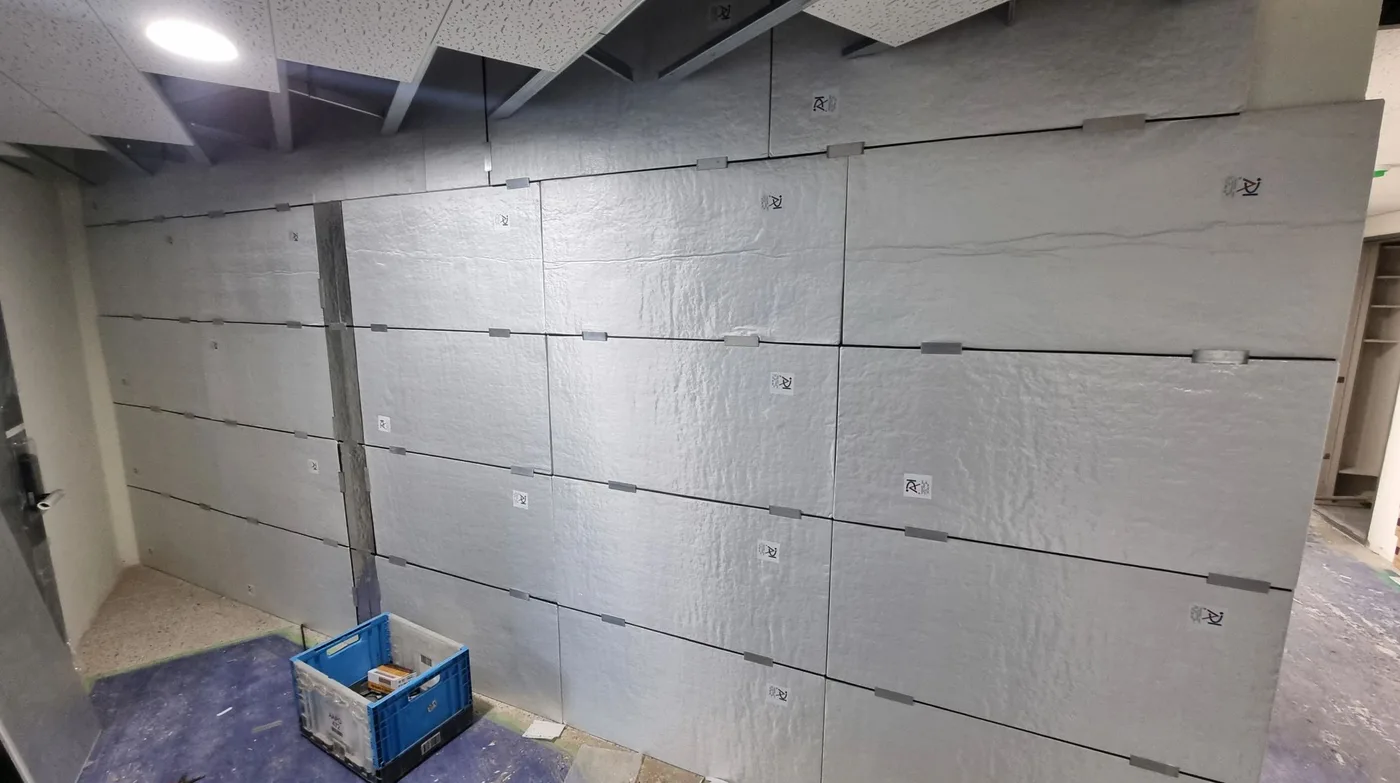
This is also why VIP is specified on the hardest condensation battlegrounds — top-floor ceilings under cold roofs, wall faces behind kitchens and refrigerators, stairwell walls, and curtain-wall backing panels.

Vacuum insulation panels installed across an interior wall
Interior wall application — panels laid in a sealed grid
06 · Installation

Three rules protect the vacuum.

A VIP is a precision component, not a commodity board. Handled by these three rules, it performs for the life of the building.

1

Measured first, made to order

Panels cannot be cut on site. Every project is measured from drawings, and the factory produces the exact panel sizes the layout requires — delivered ready to place.

2

Never pierce the envelope

No cutting, drilling, or nailing — a punctured envelope returns the panel to ordinary-foam performance. Fixing is by adhesive systems and mechanical details that never touch the film.

3

Seal every joint

Panel-to-panel joints and edges are heat's escape route. Joints are closed with dedicated urethane foam or high-performance insulation tape to shut down thermal bridging at the seams.

07 · Applications

From apartment walls to battery packs.

A·01

Zero-energy buildings

Meets tightening energy codes and ZEB certification targets within thin wall build-ups.

A·02

Balcony & interior remodels

Code-level insulation in centimeters — the standard answer for extension work.

A·03

Top floors & rooftops

Ceiling and roof-slab insulation where condensation pressure is highest.

A·04

Curtain-wall backing

Slim spandrel and backing insulation behind stone, ceramic, and aluminum facades.

A·05

Cold-chain logistics

Vaccine, biopharma, and fresh-food shipping containers that must hold temperature for days.

A·06

Refrigeration & appliances

Thinner cabinet walls, larger interior volume — the appliance industry's original VIP use.

A·07

EV battery systems

Thermal management and propagation barriers inside electric-vehicle battery packs.

A·08

Plant & industrial

Process equipment and enclosures where space for insulation simply doesn't exist.

08 · Quality & Track Record

Built by a certified Korean insulation specialist.

Origin

Manufactured in Korea

Produced by a specialist Korean insulation manufacturer with roughly twenty years of experience in high-performance thermal materials.

Quality system

ISO 9001 : 2015 plant

Manufactured under a certified quality management system by a KS-certified insulation producer.

Core material

Inorganic, non-combustible core

The fumed-silica core is a mineral material that does not burn — no flaming drips, no toxic-gas fuel load from the core.

Longevity design

Barrier film + getter

Hybrid gas-barrier envelope and internal getter jointly maintain the vacuum for long-term, stable thermal performance.

Track record

Tier-1 construction supply

The maker's insulation is installed across premium apartment, infrastructure, and plant projects for Korea's leading construction groups. References available to serious buyers.

Fabrication

Made to measure

Every order is produced to project drawings in the exact panel sizes required — precision manufacturing, not stock-board approximation.

09 · Sourcing through DEMORE

Send the drawings. We connect the rest.

DEMORE is the export sourcing partner for this line. Share your project drawings or panel schedule, target thermal values, and destination — one English-speaking contact handles specification, quotation, production follow-up, and shipping coordination with the Korean plant. Prices are quoted per inquiry; we typically reply within one business day with pricing, minimums, and lead times.

10 · FAQ

Buyer questions, answered.

How much better than conventional insulation is it, really?

Thermal conductivity of 0.002–0.004 W/m·K is roughly 8–10 times beyond rigid urethane or XPS. In practical terms: the code-level wall value that needs 150–230 mm of foam or mineral wool is met with about 15 mm of VIP.

Can panels be cut to size on site?

No — and this is by design. Cutting breaks the vacuum and the panel reverts to ordinary-foam performance. Instead, every project is measured from drawings and panels are factory-made in the exact sizes required.

How long does the vacuum last?

The hybrid barrier envelope blocks gas ingress and the internal getter absorbs the trace molecules that get through, together maintaining stable performance over the long service life the panel is engineered for. Aging data and warranty terms are provided with quotation.

What about fire performance?

The fumed-silica core is an inorganic mineral material that does not burn. Envelope and system-level fire classifications depend on the assembly and your local code — tell us your requirement and we will confirm the documentation for your market.

What sizes and thicknesses are available?

Panels are made to measure per project. Typical thicknesses run 10–20 mm for code-level wall performance, with other thicknesses available by specification. Send your panel schedule for confirmation.

How do I get pricing?

Prices are not published — they depend on panel sizes, thickness, quantities, and destination. Send an inquiry with drawings or a panel schedule and DEMORE typically replies within one business day with pricing, MOQs, and lead times.

Start the conversation

Thinner walls. Bigger rooms. One inquiry away.