DEMORE / Building Materials / Product Dossier
Product Dossier · No. BM-05

Self-Adhesive Interior Wall Tiles

Peel the liner. Press to the wall. Done. Self-adhesive interior wall tiles in brick and square patterns require no adhesive, no grout, and no specialist tools — turning a day of wet trade work into an afternoon of DIY. Designed and manufactured in Korea, sourced for global buyers through DEMORE.

Peel&Stick
No adhesive needed
2
Pattern families (brick & square)
Notools
DIY or professional
Interior
Wall application
01 · Overview

A tiled wall in an afternoon. No wet work. No curing time.

Conventional ceramic tiling is a multi-day wet trade: prepare the substrate, apply adhesive, set tiles, allow the adhesive to cure, grout the joints, allow grout to cure. Three or four days minimum — and that requires a tiler.

Self-adhesive wall tiles eliminate every wet step. A factory-applied pressure-sensitive adhesive is protected by a peel-off liner on the back of each tile. Peel the liner, align the tile, press — and the tile is fixed. No trowel, no grout float, no bucket, no curing wait.

Available in two design families — brick bond and square grid — the tiles are designed for interior wall feature surfaces, accent walls, and renovation projects where speed and minimum disruption matter. Designed and manufactured in Korea, sourced for global buyers through DEMORE.
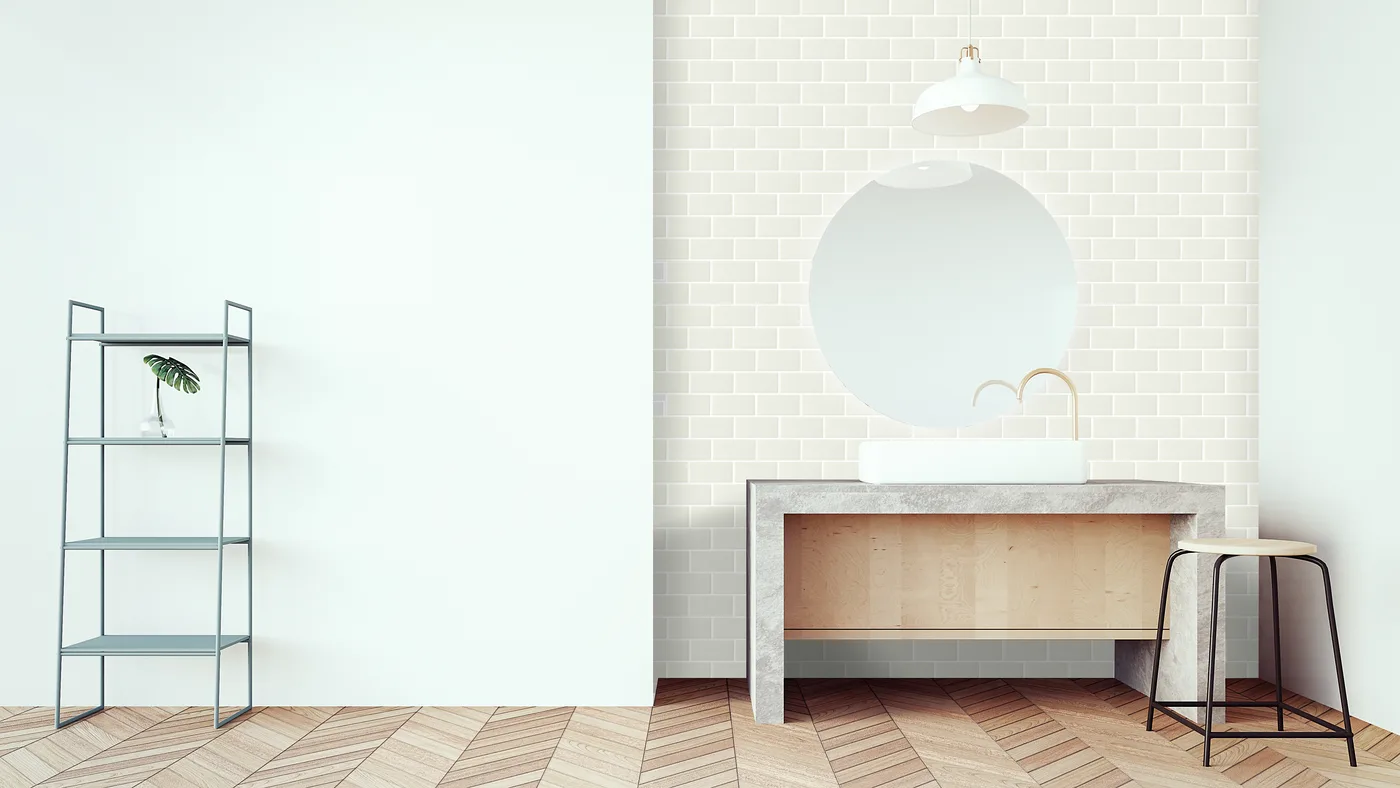
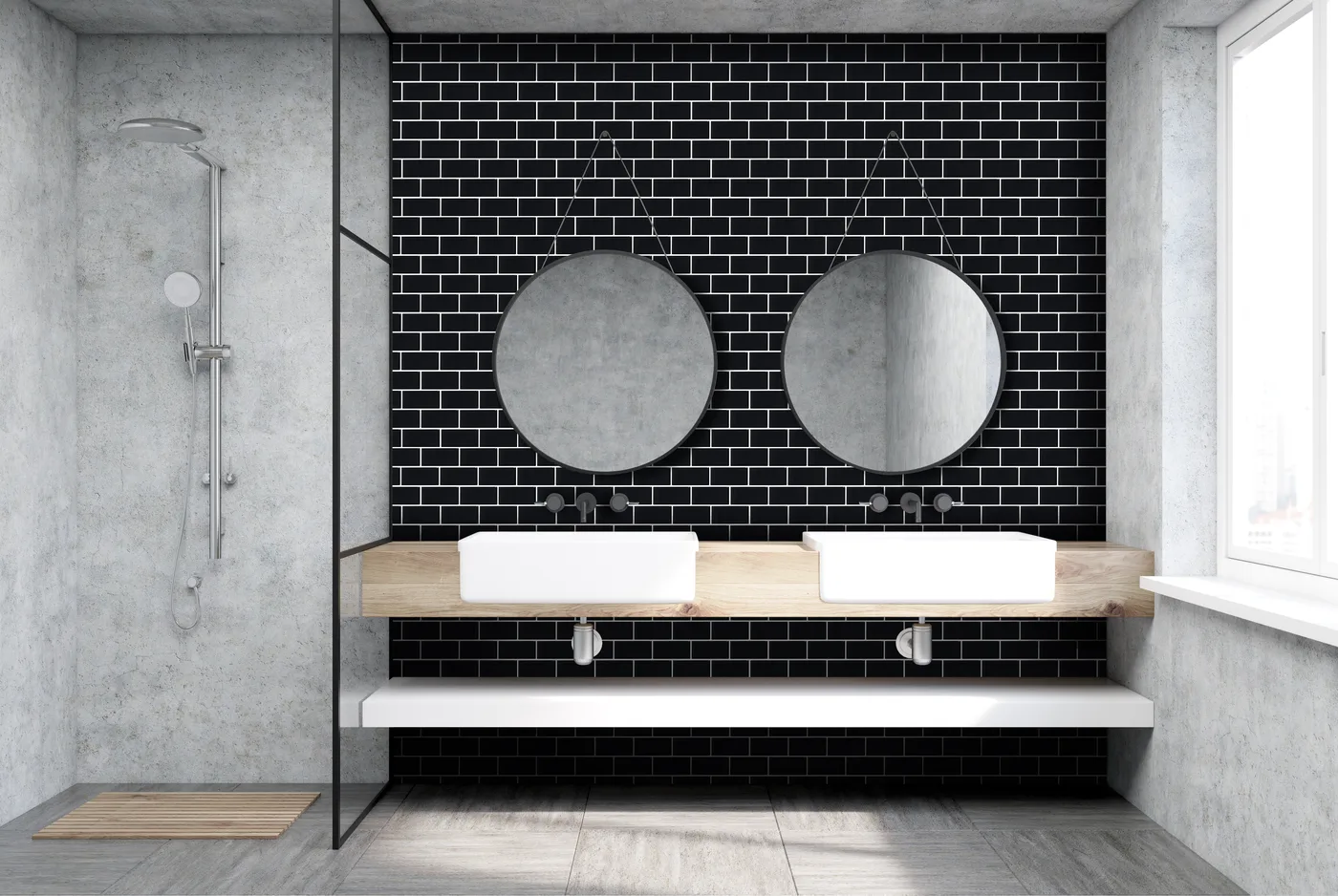
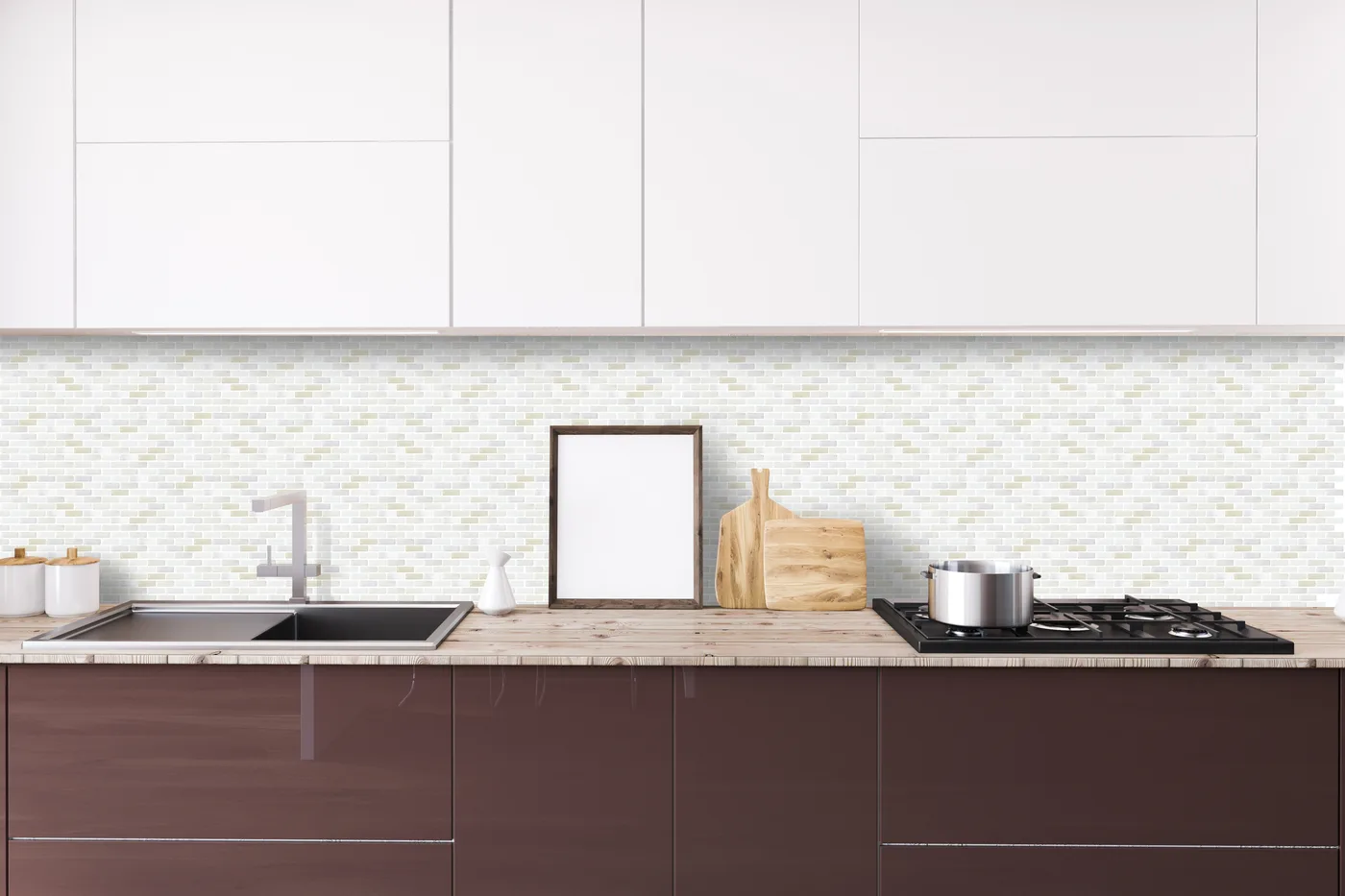
Self-adhesive wall tiles in brick pattern on interior wall
Brick-pattern self-adhesive wall tiles — installed without adhesive or grout
02 · Patterns

Brick bond and square grid. Two design languages.

Brick pattern self-adhesive tile close-up
Brick bond pattern — staggered horizontal coursing

Brick bond pattern reproduces the classic running-bond masonry layout — staggered horizontal tiles with each course offset by half a unit. The result reads as a relaxed, textured wall surface suitable for kitchen backsplash areas, hallways, feature walls in living rooms, and retail accent surfaces. Brick pattern works equally well in raw material finishes (stone-look, concrete-look) and in brighter, painted-aesthetic finishes.

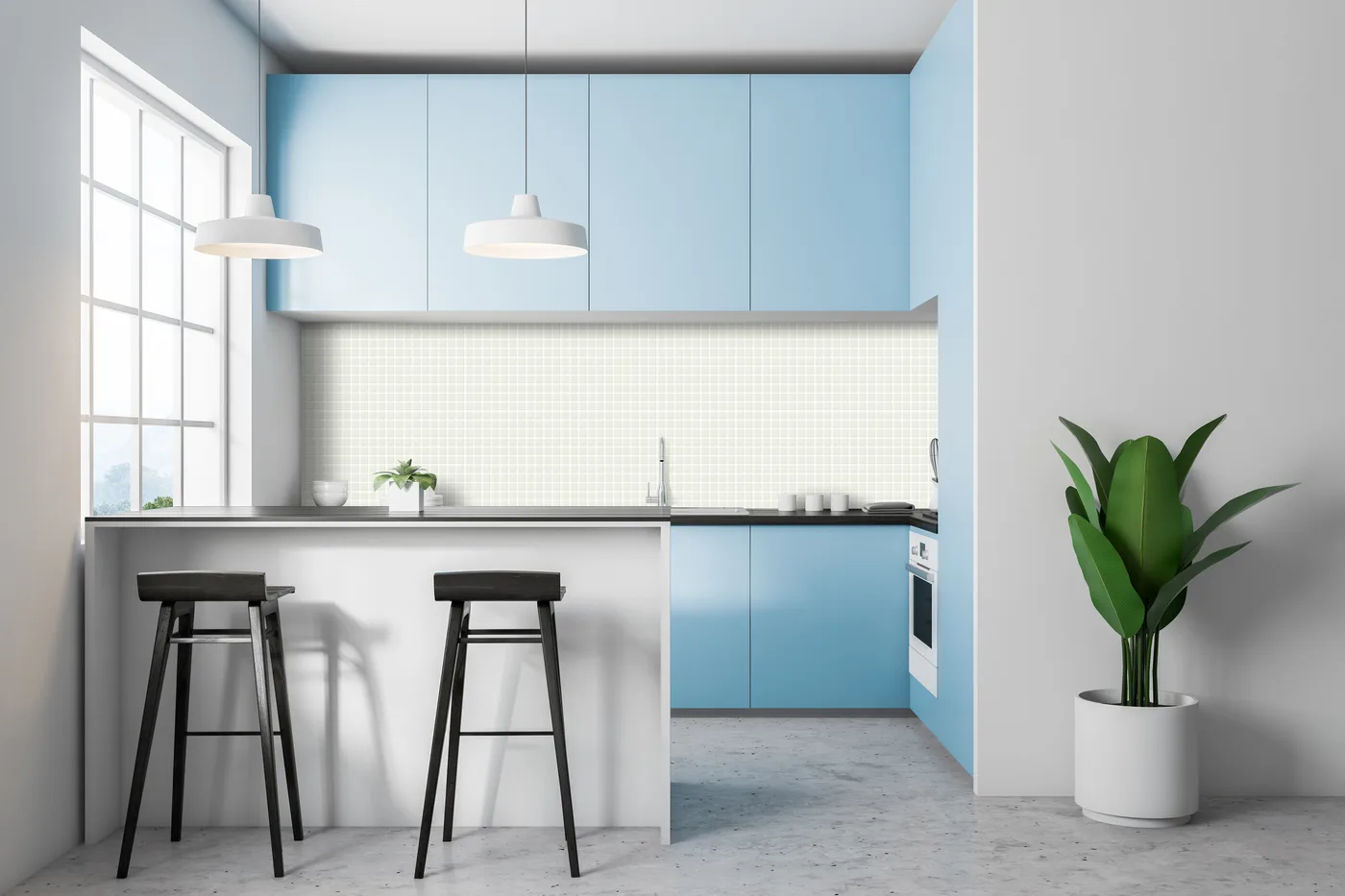
Square grid pattern aligns tiles on a regular square or rectangular grid with consistent joint lines in both directions. The geometry is crisper and more formal — suited to bathroom-adjacent wet areas (where the tile is applied but not directly exposed to water), utility rooms, storage spaces, and retail environments where a more structured visual grid is desired.

Exact colour palette, finish options, and tile dimensions are in the product specification sheet. Contact DEMORE to request the current range.

Both pattern families share the same installation method and the same backing adhesive. The choice between them is purely aesthetic — neither requires a different technique nor a different tool.

Square grid self-adhesive tile pattern
Square grid pattern — regular orthogonal coursing
03 · Installation

Three steps. No specialist. No wet work.

The entire installation process requires a tape measure, a pencil, and a utility knife for cuts. Everything else is done by hand.

1

Prepare the wall

The wall must be clean, dry, dust-free, and reasonably flat. Remove loose paint, grease, and dust. A clean smooth surface — painted plaster, plasterboard, existing ceramic tile — gives the best adhesion. Surface preparation takes a few minutes, not hours.

2

Peel and place

Peel the liner off the back of the tile to expose the adhesive. Align the tile against your layout lines, press firmly from the centre outward to release any air, and hold for a few seconds. The tile is fixed immediately — no waiting for adhesive to grab.

3

Trim for edges

Border tiles and outlet cut-outs are trimmed with a utility knife and a straight edge. The tile material cuts cleanly without specialist tile-cutting equipment. Grout joints, if desired, can be added with self-adhesive grout tape — no wet grouting required.

04 · Where It Works

Interior walls in dry or low-splash environments.

Self-adhesive wall tiles are designed for interior vertical surfaces in dry or low-splash environments. They perform best where the wall surface temperature is stable, humidity is not extreme, and the surface is not in direct and prolonged contact with water.

Proven applications include: kitchen feature walls and backsplash areas (above the splash zone, not inside a wet splash zone in front of the sink); accent walls in living rooms, bedrooms, and corridors; hallway feature panels; retail display walls; and office reception and meeting room feature surfaces.

The tiles can be applied over painted plaster, plasterboard, and clean existing ceramic tile. They are not suitable for exterior applications, floors, or continuous-wet surfaces. Full specification and tested substrate compatibility are in the technical data sheet — request through DEMORE.

Self-adhesive tiles in kitchen feature wall application
Kitchen feature wall — dry-area application
05 · Honest Limitations

Where self-adhesive tiles should not go.

Clarity about limitations is part of specifying correctly. Self-adhesive wall tiles are not a universal replacement for ceramic tiling.

Not suitable

Wet shower walls

Direct, continuous water exposure — shower cubicle walls, bath surrounds — is beyond the design envelope of peel-and-stick adhesive. Use conventional waterproof ceramic or stone tile in wet zones.

Not suitable

Floor surfaces

Foot traffic and point loads from furniture require a different adhesion system and a different material specification. Self-adhesive wall tiles are wall products only.

Not suitable

Exterior walls

UV exposure, freeze-thaw cycles, and rain degrade adhesive performance over time. These tiles are interior products only.

Full substrate compatibility, temperature range, and exposure limitations are in the manufacturer's technical data sheet. Contact DEMORE to request the TDS before specifying for any non-standard application.

06 · Applications

Renovation speed for residential, hospitality, and retail.

A·01

Residential renovation

Feature walls, kitchen backsplash areas, and hallways where wet trade work would require vacating the property for days.

A·02

Rental properties

Tenant-change refreshes and landlord refurbishments where a visual upgrade must be completed quickly and without building-work disruption.

A·03

Hotel renovation

Room refurbishment at speed, with minimal disturbance to adjacent rooms — no wet adhesive, no curing wait, no specialist crew.

A·04

Retail fit-out

Feature walls and display backing surfaces in retail and hospitality interiors where the fit-out window is tight and appearance matters.

A·05

Office interiors

Reception walls, meeting room feature panels, and break-room kitchen areas where a tiled look is required without construction-site disruption.

A·06

Exhibition & events

Temporary or semi-permanent display walls where removability [확인 필요] and re-installation are part of the brief.

07 · FAQ

Buyer questions, answered.

Will the tiles remove cleanly without damaging the wall?

Removal performance depends on the substrate, how long the tile has been in place, and the surface paint beneath. [확인 필요] — confirm removal characteristics with DEMORE for your specific substrate before committing to a reversible-installation project.

Can the tiles be painted after installation?

[확인 필요] — confirm paintability with the manufacturer's technical data sheet, available through DEMORE. Paintability depends on the tile surface material and finish.

What are the tile dimensions and thickness?

Tile dimensions, thickness, and joint width are in the product specification sheet. Contact DEMORE to request the full range specification.

How are edge tiles and outlet cut-outs handled?

Edge tiles and cut-outs around switches and sockets are trimmed with a utility knife and straight edge. No wet saw or tile cutter is required for standard cuts.

How do I get samples and pricing?

Contact DEMORE at [email protected] with your project specification — pattern preference, surface area, and target market. DEMORE typically replies within one business day with pricing, minimum order quantities, lead times, and a sample request process.

Start the conversation

A tiled wall. In an afternoon. No wet work.